The $18 Ice Cube Is Here to Make You Feel Poor
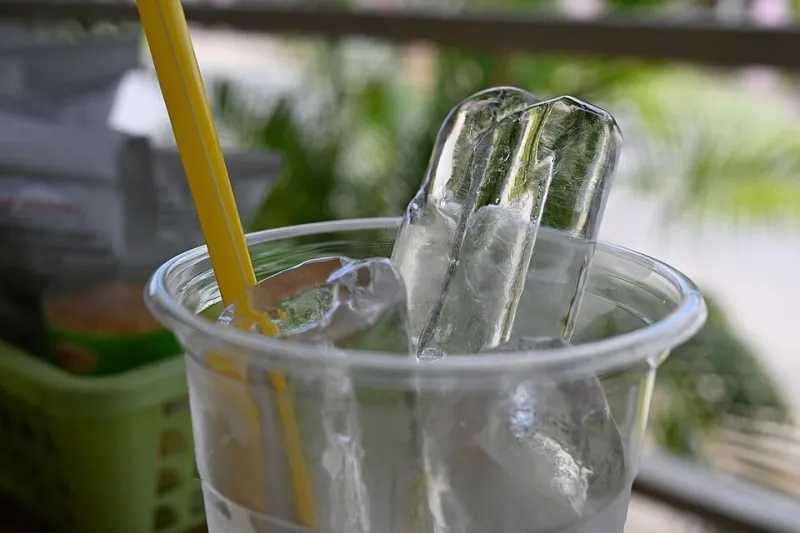
Photo: PattayaPatrol, CC BY-SA 4.0, via Wikimedia Commons
Water is free. Ice is cheap. And yet, somewhere in America, a person is paying eighteen dollars for a bag of clear ice cubes that will melt in a glass of bourbon and disappear forever. This is not a fever dream. This is the artisanal ice economy, and it is coming for your freezer.
Clear Ice Is Just Water With a Publicist
All ice is frozen water. Clear ice is frozen water that has been treated like a celebrity. It has a publicist, a backstory, and a price point. The cloudiness in regular ice comes from trapped air bubbles. Clear ice removes those bubbles through directional freezing, a process that sounds like a physics lecture and looks like a science fair project. The result is a cube so transparent you can see your own reflection in it. That reflection is paying $18 for ice.
The premium is not about taste. It is about aesthetics. A clear cube melts more slowly, dilutes your drink less, and makes your home bar look like a cocktail lounge. It is the difference between a drink and a drink with a story. And Americans love a story, especially when it comes with a delivery subscription.
Directional Freezing and the Physics of Flexing
Directional freezing is simple in theory. You freeze water in a way that pushes impurities and air bubbles to one end. Then you cut off the cloudy part. The clear part is your product. The cloudy part is your problem. The process requires time, space, and a freezer that you are not using for frozen pizza. This is why most people do not do it at home. This is also why a company can charge $18 for a bag.
The physics is real. The flex is also real. Clear ice says something about you. It says you care about the details. It says you have a home bar, or at least a bottle of good gin. It says you are the kind of person who reads the tasting notes on a bag of frozen water. And if you are that person, you are also the kind of person who will pay for the subscription.
The Subscription Model Comes for Your Freezer
The direct-to-consumer ice business has discovered the same thing every subscription business discovers: people will pay for convenience if you frame it as a lifestyle. You can now get clear ice delivered to your door on a schedule. You can choose the size of the cube. You can choose the shape. You can choose the bag. The ice arrives in a box with branding and an insert that explains how to store it. You put it in the freezer next to the frozen peas and feel a little more sophisticated.
The subscription model works because ice is a consumable. You run out. You reorder. The company does not have to convince you to buy a new thing; it just has to remind you that you are out of the old thing. This is the same model that made bottled water a $20 billion industry. The difference is that bottled water at least pretends to be about health. Clear ice does not pretend. It is about vibes.
Tasting Notes for Frozen Water
The artisanal ice industry has started to develop tasting notes. This is where it gets weird. Ice is water. Water does not taste like much. But if you freeze it slowly and cut it carefully, it can taste like nothing in a more expensive way. One brand describes its ice as clean and neutral with a crisp finish. Another says it is designed to complement, not compete. This is the language of wine applied to the contents of your tap.
The tasting notes are not for the ice. They are for the buyer. They give you a way to talk about the ice without admitting that you spent $18 on it. You are not buying frozen water. You are buying a finishing touch. You are buying the feeling of a well-made drink. You are buying the story you tell when someone asks why the ice looks like that.
What You Are Actually Buying
You are not buying ice. You are buying time. Clear ice takes time to make. The company spends that time so you do not have to. You are buying space. The company has a freezer so you do not have to clear a shelf. You are buying the fantasy of a life where you have a home bar and a cocktail hour and a freezer that is not full of frozen pizza. The ice is just the prop.
This is the same logic that sells $12 artisanal toast and $9 heirloom carrots. The premium is not in the product. It is in the presentation. The product is an excuse to participate in a certain kind of life. And if you can afford it, the excuse is worth it. If you cannot, the ice is still just ice.
The Ice Arms Race Will Not End Well
The artisanal ice economy is growing because the premiumization of everything is growing. We have premium water, premium toast, premium salt, premium ice. Eventually, someone will sell premium air. They will call it curated oxygen. They will ship it in a box with a QR code. And we will buy it, because it will make us feel like we are part of something.
For now, the ice is enough. It is a small luxury. It is a conversation starter. It is a way to say I care about the details without actually doing anything difficult. And if you are the kind of person who buys $18 ice, you are also the kind of person who will read this and nod. The ice is not the problem. The ice is the symptom. And the symptom is delicious.