We Spent $200 Billion Building a Ghost Town in the Sky and Nobody Moved In
Somewhere in a server farm that costs more per month to cool than your entire neighborhood earns in a year, there is a piece of virtual land that someone paid $450,000 for. It is next to Snoop Dogg's virtual mansion. It has no walls. Nobody visits. The grass — if you can call procedurally generated polygons grass — grows forever without needing to be mowed, which is the one genuinely useful feature of owning property that does not exist.
Welcome to the metaverse. Population: fewer people than a Tuesday afternoon at a Sears that's been closing for three years.
The Pitch Was Genuinely Unhinged and We Loved It
Cast your mind back to late 2021. Mark Zuckerberg stood in front of a camera, his affect somewhere between "man who just learned what joy is" and "hostage reading from a script," and told the world that the future of human connection was going to happen inside a virtual world where everyone would be represented by a legless cartoon torso. He renamed his entire company Meta. He spent, depending on who's counting, somewhere between $36 billion and $46 billion on Reality Labs over the following three years. The stock dropped roughly 75 percent.
This was not, to be clear, a small miscalculation. This was the corporate equivalent of betting your house, your car, your grandmother's china, and your neighbor's dog on a horse that turned out to be a drawing of a horse.
And Zuckerberg wasn't alone. Microsoft bought Activision Blizzard partly with metaverse ambitions baked into the pitch deck. Nike built Nikeland. Walmart filed metaverse trademarks. JP Morgan opened a virtual lounge in Decentraland, which at its peak had about 38 daily active users, a number that is not a typo and should haunt every executive who approved that budget.
The Real Estate Flippers Deserve Their Own Documentary
Here's where the story gets genuinely, cinematically tragic: regular people got in on this.
During the peak frenzy of late 2021 and early 2022, virtual land in platforms like Decentraland and The Sandbox was selling for prices that would make a Brooklyn landlord blush. A plot near the central plaza in Decentraland went for $2.4 million. Parcels adjacent to celebrity "estates" — because apparently proximity to Snoop Dogg's avatar matters — were flipping for six figures.
We spoke to Marcus, a 34-year-old marketing consultant from Phoenix who asked us not to use his last name, mostly because his wife still doesn't know the full number. He bought three parcels of Decentraland land in January 2022 for a combined $18,000. "The pitch made total sense to me at the time," he says, with the specific tone of someone who has rehearsed this sentence. "Location, location, location, right? Except the location is... nowhere."
He still owns the parcels. He has not done anything with them. He checks in every few months "just to see if anything's happening." Nothing is happening. "I went in last October and walked around for like twenty minutes and saw two other avatars. One of them might have been a bot. The other one was definitely lost."
Marcus is not alone. Across Reddit, Discord servers, and the comment sections of articles that aged poorly, you can find entire communities of people who bought virtual land and are now engaged in the world's most depressing holding pattern, hoping the market recovers the way someone hopes a Beanie Baby collection will eventually pay for retirement.
What the Executives Were Actually Thinking
The most fascinating part of the metaverse collapse isn't the money. It's the psychology.
The people who drove these investments weren't idiots. They were, by most measurable standards, among the most strategically sophisticated operators in American business. So how did they collectively hallucinate an entire future that the actual public had zero interest in inhabiting?
Part of it was COVID. The pandemic created a genuine, temporary spike in virtual interaction — Zoom calls, Animal Crossing islands, virtual concerts in Fortnite that drew millions. Tech executives looked at that data and made a catastrophic category error: they confused "people doing virtual things because they literally cannot go outside" with "people who fundamentally want to replace physical reality with a cartoon simulation."
Part of it was competitive paranoia. Once Zuckerberg went all-in, every other major tech company faced a choice: get left behind or buy a ticket to the same train. Nobody wanted to be the executive who explained to their board why they missed the next internet. So they all climbed on. The train went nowhere. They were all on it together, which at least meant no one individual had to feel uniquely stupid.
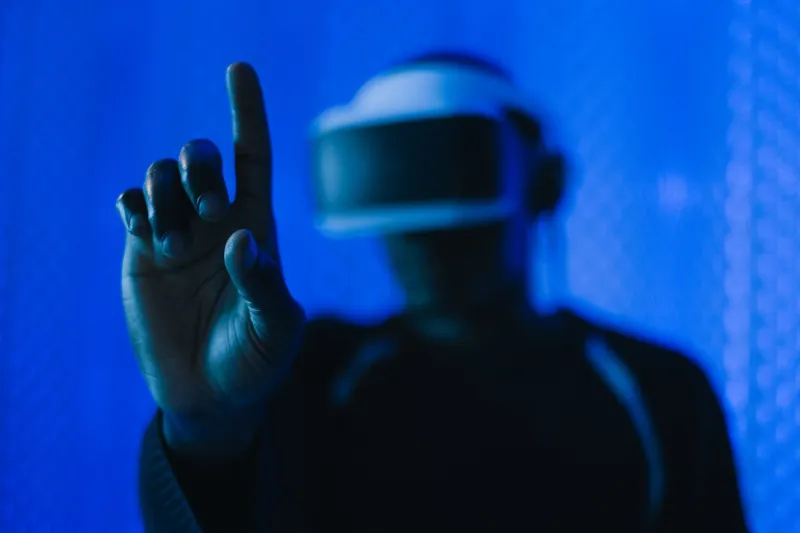
And part of it — the part that doesn't get discussed enough — is that these platforms were genuinely, profoundly terrible to use. The graphics looked like a Wii Sports fever dream. The social dynamics of wandering through a near-empty virtual space were less "exciting frontier" and more "unsettling outdoor mall in a city that's losing population." The hardware required to have a halfway decent experience cost $500 minimum and left you looking like you were trying to FaceTime God.
The Hangover Is Expensive and Ongoing
By 2023, Meta had quietly pivoted its messaging. Reality Labs losses were reframed as "long-term investments." Zuckerberg started talking about AI instead, with the same evangelical energy he'd previously reserved for virtual worlds, which is either a sign of genuine strategic flexibility or the world's most expensive game of hot potato.
Microsoft shut down its industrial metaverse division. Walmart's metaverse ambitions dissolved without much fanfare. The virtual JP Morgan lounge in Decentraland became a meme. Decentraland's daily active user count, never impressive, became the kind of statistic people share at dinner parties when they want to make a point about hype cycles.
The Sandbox, another major virtual world platform, laid off 40 percent of its staff in 2023. The NFT market that had been financially intertwined with metaverse real estate collapsed so thoroughly that the phrase "this is your NFT" became internet shorthand for something that was once valuable and is now a liability.
Marcus, our Phoenix-based virtual landowner, has made peace with his $18,000. Mostly. "I think about it like an expensive lesson," he says. "Like, I paid $18,000 to learn that I fundamentally misunderstood what people want from technology." He pauses. "My therapist says that's a healthy reframe. My wife says it's cope."
He's probably right on both counts.
So What Actually Lives There Now
If you log into Decentraland today — and you can, it's free, and it will take you about forty-five minutes to figure out the interface, which is itself a damning statement — you'll find a world that is genuinely, hauntingly beautiful in its emptiness. There are galleries with digital art that nobody looks at. There are clubs with music playing for no one. There are real estate listings for parcels that cost more than a used car, posted by people who are either wildly optimistic or haven't checked the market recently.
Occasionally, there are events. Small ones. A virtual concert here, a community meetup there. The people who show up are genuine believers, and there is something almost poignant about their persistence — digital homesteaders in a frontier that the covered wagons left without stopping.
The metaverse isn't dead, exactly. It's more like it's in a very long, very expensive coma, surrounded by executives who keep insisting the EEG is showing promising activity.
Somewhere, in a server that costs a fortune to keep running, Marcus's three parcels of virtual land sit untouched. The procedurally generated sun rises over them every morning. No one watches it. It's beautiful, in a way that only completely pointless things can be.
If you also bought metaverse land and would like to be sad about it together, PageRatta's DMs are open. We're not judging. We're absolutely judging, but we'll be kind about it.