The Jacket That Would Not Stay Sold: Inside the Secondhand Merry-Go-Round Bankrupting Gen Z
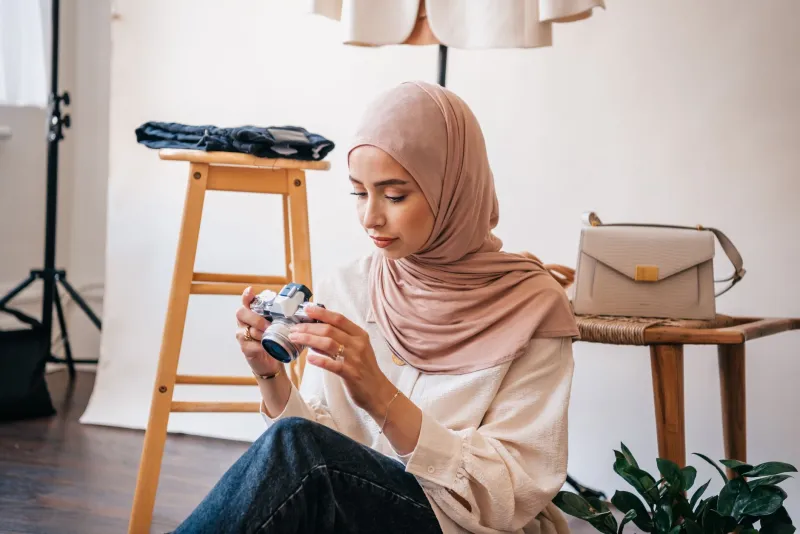
Meet Kayla. Kayla is 24, lives in a one-bedroom apartment in Chicago, and has sold the same oversized denim trucker jacket three times in the last fourteen months. She bought it originally for $34 on Depop. She sold it for $28 when she needed rent money and decided it "wasn't really her vibe anymore." She bought it back — from a different seller, but the same jacket, essentially — for $41 two months later when the algorithm showed her a photo of someone styling it exactly the way she'd always imagined. She sold it again for $22 when her closet felt too full and she was in a minimalism phase. She is currently, as of this writing, watching a listing for what appears to be the same jacket in her Depop saved items.
Kayla is not unusual. Kayla is the entire economy.
The Sustainability Myth With a 40% Loss
The secondhand fashion market was supposed to be the answer. Depop, Poshmark, Mercari, ThredUp — these platforms arrived with the promise that buying used was good for the planet, good for your wallet, and good for your aesthetic. And to be fair, the first part might be marginally true. The second and third parts have been quietly dismantled by the same algorithmic forces that run every other attention economy.
Here's what actually happens in the secondhand cycle, broken down with the clinical precision it deserves:
Step one: You see something on TikTok or Instagram that sparks what can only be described as a physical need. It's a vintage piece, or something that looks vintage, or something that an influencer has styled so specifically that you can see exactly who you would become if you owned it.
Step two: You find a version of it on a resale platform. You pay a price that feels like a deal but is, upon reflection, about $15 more than it would have cost at an actual thrift store before influencers discovered thrift stores.
Step three: You photograph it. This is non-negotiable. The photo is the point.
Step four: Approximately six to ten weeks later, you decide it doesn't fit your current aesthetic, your current budget, or your current mood. You list it. You sell it for less than you paid. You tell yourself you're "making space."
Step five: Three months later, the algorithm — which has been watching — shows you the exact thing you sold, or something close enough to trigger the same response. You buy it again.
This is not sustainable fashion. This is a perpetual motion machine designed to keep you broke and your closet in a constant state of editorial flux.
The Content Imperative
What makes the secondhand cycle genuinely different from regular consumer behavior is the role that content plays in driving it. When you buy something from Zara, wear it twice, and throw it away, that's just regular fast fashion consumption. When you buy something from Depop, photograph it in four different outfits, post the photos, list it for resale, and document the listing process — you've turned the entire transaction into a content pipeline.
The resale platforms understood this early. Depop in particular is structured less like a marketplace and more like a social media feed that occasionally allows transactions. Your shop is your profile. Your listings are your posts. Your aesthetic is your brand. Selling something isn't just clearing space — it's content. Buying something is content. The haul video, the "what I thrifted this week" reel, the "decluttering my wardrobe" TikTok — all of it is content, and all of it is powered by transactions that, financially speaking, make very little sense.
The Math Nobody Wants to Do
Let's talk numbers, because the numbers are genuinely unhinged.
Depop takes a 10% fee on every sale. Poshmark takes 20% on anything over $15. Mercari takes up to 13.5% between their selling fee and payment processing. Add shipping costs, packaging materials (because presentation matters for the photos), and the time spent listing, photographing, and communicating with buyers, and the average resale transaction on these platforms nets the seller somewhere between "technically positive" and "would have been better off donating it and taking the tax deduction."
And yet the platforms are booming. Poshmark reported over 80 million registered users before its acquisition by Naver. Depop has become the primary shopping destination for a significant chunk of Gen Z. The money isn't leaving the system — it's just cycling through it, skimming a percentage at every pass, like a toll booth on a road that circles back to its own entrance.
Who's Actually Getting Paid
The people making real money in the secondhand economy are not the people selling their old jeans. They are the platforms, the influencers who've turned resale into a content genre, and the relatively small number of professional resellers who treat Goodwill like a wholesale distributor and Depop like a storefront.
The professional resellers are, in a way, the most honest participants in the system. They have no illusions about sustainability or aesthetics. They are arbitraging the gap between what something costs at a thrift store and what someone on the internet will pay for it after seeing it styled correctly. They are running a business. Everyone else is running a vibe.
The Jacket Comes Back Around
Kayla, last we checked, did not buy the jacket again. She bought a different jacket — a Levi's sherpa-lined number she found for $19 on Mercari, originally listed at $35, marked down twice because it sat unsold for six weeks.
She's already photographed it. It looks great. She's not sure it's really her, but the photos are good, and she might list it in a couple months when the aesthetic shifts again.
The algorithm is patient. It will wait.