Knockoff Nation: How Americans Convinced Themselves That Buying Eight Fake Things Is Smarter Than Buying One Real Thing
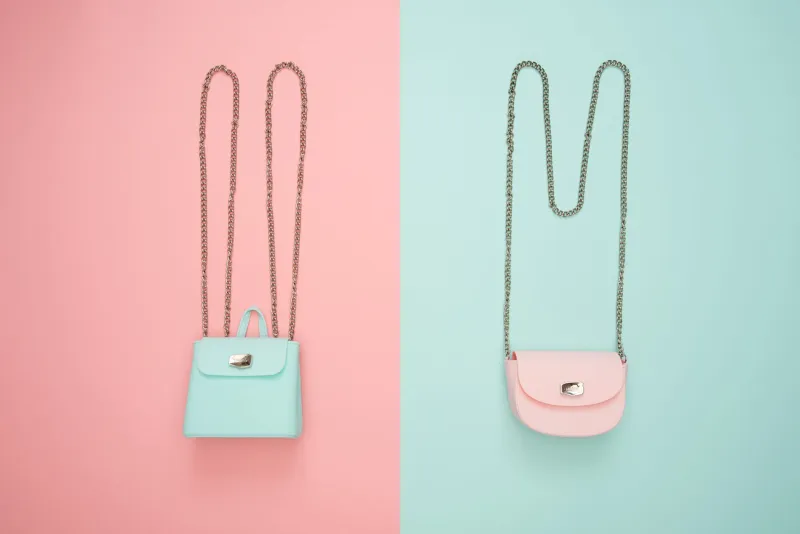
Introduce yourself to the math of the modern dupe economy. A designer tote bag retails for $650. You do not buy it, because you are financially responsible and also because $650 is a car payment and a half. Instead, you buy a $79 "inspired by" version from a brand with a vaguely Italian name that was registered in Delaware six months ago. It falls apart in four months. You buy another one. Then a slightly different one because the handles on the second one looked cheap in photos. Then a third from a different seller with better reviews. Then a fourth because it comes in the color the original didn't offer, which feels like winning.
You have now spent $316 on bags. You have four bags of declining structural integrity. The original bag, which you did not buy because it was irresponsible, would have cost $650 and still existed.
Congratulations on your smart financial choices.
The Dupe Has Been Rebranded and It's Working Beautifully
For most of human commercial history, buying a knockoff was a transaction you conducted in a specific kind of store or from a specific kind of folding table, and you knew what you were doing and felt some version of sheepish about it. The product was cheaper because it was worse, and you accepted that exchange with clear eyes.
Something shifted. The word "dupe" — short for duplicate, but carrying the energy of discovery rather than compromise — became a TikTok genre, a content category, and eventually a shopping philosophy. "Dupe culture" reframed the knockoff not as a lesser substitute but as a superior choice. You're not buying the cheap version. You're outsmarting the luxury market. You're a savvy consumer who has seen through the brand markup. You're practically an economist.
This rebranding is one of the more impressive feats of collective self-deception in recent retail history.
The $400 Billion Shadow Economy With Great Lighting
The global counterfeit and knockoff goods market is estimated at around $400 billion annually, and that figure doesn't fully capture the "inspired by" gray zone where most American dupe shopping actually lives — the products that aren't technically counterfeit but are absolutely trading on the visual equity of a luxury original.
That ecosystem is enormous, and it's being actively fueled by content. TikTok's #dupe hashtag has accumulated billions of views. YouTube channels dedicated entirely to luxury comparisons and "is it worth it" breakdowns have millions of subscribers. There is a thriving content genre built entirely around the question of how closely you can approximate a rich person's life without paying rich person prices, and the answer the content always arrives at is: pretty closely, buy these seven things.
The seven things cost more than the one thing would have. The content creator gets an affiliate commission on all seven. This is the economy now.
The Moral Accounting Is Spectacular
What makes the dupe economy genuinely fascinating — and by fascinating I mean slightly unhinged — is the ethical architecture that's been constructed around it.
Buying a dupe isn't just financially smart. It's morally preferable. Luxury brands are exploitative. Their markup is unjustifiable. Their supply chains are questionable. Their marketing is aspirational manipulation. All of this is, to varying degrees, true. But the dupe industry is not meaningfully better on any of these dimensions — the fast-fashion factories producing $79 knockoff totes are not operating with higher labor standards than the factories producing the $79 item that goes into a $650 branded bag. The carbon footprint of buying eight low-quality items that fail and get discarded is not better than buying one item that lasts.
None of this disrupts the moral accounting, because the moral accounting isn't really about ethics. It's about permission. The ethical framing gives you permission to want the aesthetic of luxury without the price tag, to participate in status signaling while positioning yourself as someone who has transcended status signaling. It's a hat trick of self-justification so elegant it deserves its own case study.
The Authenticity Markup Is Also a Markup
Here's a wrinkle worth examining. The dupe market has spawned a counter-market: "ethical alternatives" and "sustainable dupes" that cost significantly more than the fast-fashion knockoffs but less than the luxury originals. These occupy a price point that is genuinely confusing — expensive enough to signal taste and values, cheap enough to feel like a win over the brand-name option.
A $220 "conscious" version of a $650 bag, made with "responsible materials" by a DTC brand with a very clean website and a founder letter about transparency. Is this better? Maybe slightly, on some metrics. Is it a dupe? Technically, visually, yes. Does it solve the original problem of wanting something that communicates status without paying status prices? Absolutely, and now it communicates additional status — the status of being someone who shops consciously.
You have paid $220 for a bag and a self-concept. The self-concept is doing most of the work.
The Accumulation Problem Nobody Wants to Do the Math On
The deeper issue with dupe culture is what it does to consumption patterns over time. Luxury goods, at their best, function as high-cost, low-volume purchases. You buy one good bag and use it for a decade. The per-use cost is actually quite low.
Dupe culture inverts this. Low cost per item, high volume, high turnover. The psychological satisfaction of a dupe purchase is shorter-lived than the satisfaction of a considered, expensive purchase — partly because the product quality is lower, partly because the next dupe is always being surfaced by the algorithm before you've fully bonded with the current one. So you keep buying. The closet fills. The drawer overflows. The environmental calculus becomes genuinely grim.
And yet the framing holds. Each individual purchase feels responsible. The pattern of purchases — the aggregate financial and environmental cost — is never totaled.
The Real Luxury the Dupe Economy Is Selling
Here's what the dupe economy is actually selling, underneath all the savings math and ethical framing: the feeling of being in the game.
Luxury goods have always been about participation in a visual language of status. Dupes let more people participate in that language at a lower per-entry cost. The transaction isn't really about the bag. It's about the feeling of having the bag, of being the kind of person who has the bag, of existing in a social world where the bag is readable as a signal.
The dupe doesn't quite deliver the signal. Anyone who knows the original knows the difference. But it delivers the feeling of the signal, which is maybe most of what the original was delivering anyway.
We are all, at some level, buying feelings and calling them handbags. The dupe industry just figured out how to sell the feeling at a lower margin with higher volume, and dressed the whole thing up as wisdom.
Your fourth tote is shipping in three to five business days. It looks great.