Motion Carried: How Your Homeowners Association Became Must-See TV

It's 7:04 p.m. on a Tuesday outside Raleigh, and 340 people are watching a man in a quarter-zip explain the difference between a shrub and a structured planting. Two of them live in the subdivision. The rest clicked a link on TikTok.
Welcome to the homeowners association meeting, now a broadcast property.
From Meeting Minutes to Must-See TV
For most of American history, the HOA board meeting was a private form of municipal theater: folding chairs, a projector that refused to connect, and one guy named Dale with a manila folder and a grudge. The audience was six angry people and one man whose wife made him attend.
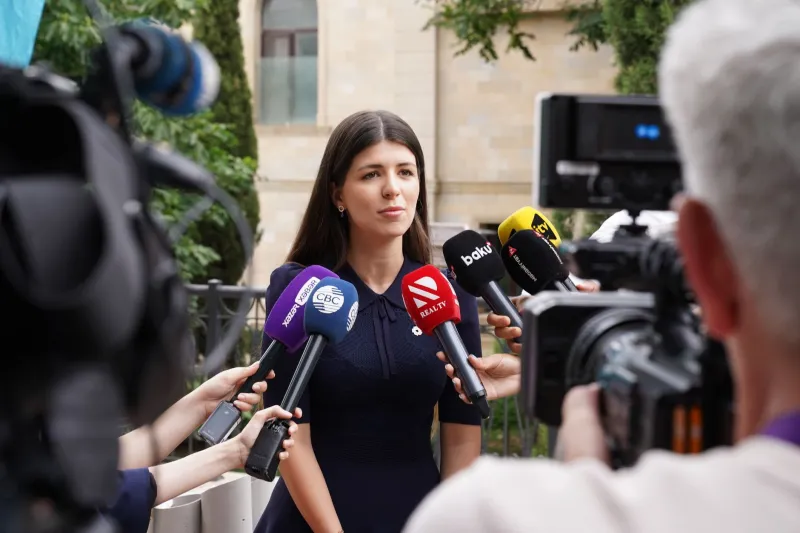
Then the cameras showed up. Livestreams came first, mostly because a quorum is easier to hit when attendance is a hyperlink. Clips followed, because ninety minutes of debate about a fence is not content, but forty seconds of it absolutely is. Then came the recaps, the cold opens, the "previously on" treatment that reframes a covenant violation as a prestige drama entering its third act.
Now you can find subdivision board meetings with tighter production values than some cable access programming. Chyrons. Timestamps. A community manager who has clearly completed a course in audience retention and now opens with, "Before we get to the pool furniture, I want to address the thing everyone's asking about in the chat."
There is always a thing everyone's asking about in the chat.
Your Property Line Has a Story Arc
The transformation is less about technology than about framing. A drainage easement dispute has always been a drama — it just used to be a drama nobody could watch. Put it on a screen with a name graphic and a comment section, and suddenly there's an antagonist, a hero, and a mid-season reversal involving a surveyor.
Residents figure this out fast. The neighbor who once wrote a pointed letter now writes a pointed letter and stands at the mic with a slide deck. People have started dressing for the meeting. Not formally — deliberately. The uniform of the aggrieved homeowner: fleece vest, sensible shoes, a laminated photo of a fence that is four inches too tall.
"We've had residents come to the podium specifically to address the online audience," one property manager in Arizona told me, on the condition that I not name the development, which is fair because I assume her board has a publicist now. "They'll say, 'For the people watching at home.' That never used to happen. That's a new sentence."
The fence has become a character. So has the mailbox. So has the woman who feeds the ducks despite three separate written warnings, who, at this point, is the closest thing the community has to a folk villain.
The Comment Section Is the New Annual Election
Here's where it gets genuinely weird. When the meeting is a broadcast, the audience is no longer the quorum. Comments come in from Ohio, from Australia, from people who wandered into a clip and stayed for the vote on whether to repaint the pool house.
Those outsiders care. That's the part nobody predicted. There are subreddits. There are reaction channels. There is, I am not making this up, a Discord server where strangers argue about a HOA in central Florida with the intensity of sports radio callers.
And residents have started performing for them. Not consciously, necessarily, but the microphone does something to a personality. A person who would never raise his voice in a parking lot will absolutely raise it when the little red light is on, because now the argument has stakes beyond the argument — there's a wrong to be right about, in front of witnesses.
Who Actually Benefits From the Broadcast
It would be easy to call this a straightforward win for transparency, and there's a real argument there. Recorded meetings mean nobody can quietly vote to raise the assessment while everyone's at work. Minutes get reviewed. Behavior tightens. Sunshine is sunshine.
But a livestream also has a way of turning every grievance into performance. Some boards have gotten very good at the format — skilled at the pause, the sympathetic nod, the "let's take that offline" that plays great on camera and means nothing in practice. A viral clip of a board confidentially handling a complaint is not the same as a complaint being handled.
And there's a quiet cost for the people who show up to speak honestly about something difficult, like a neighbor's unregistered rental or a disabled resident's genuine need, and discover that within an hour their voice is in a stitch, captioned, and the caption is a joke.
The Unaired Season
What doesn't make the feed is instructive. Conflict over capital reserves — actual money, actual roof — draws about a tenth of the audience of a dispute about a basketball hoop. Structural problems are boring. Personality problems are not. The camera loves a lawn and hates a budget.
Which is worth remembering the next time your phone serves you a forty-second clip of a man in a quarter-zip describing his fence in loving detail. It is extremely entertaining. It is also one neighborhood's Tuesday transformed into another neighborhood's halftime show.
Motion carried. Roll for the next episode.