Salt People Are Real and They Will Judge Your Morton's to Your Face
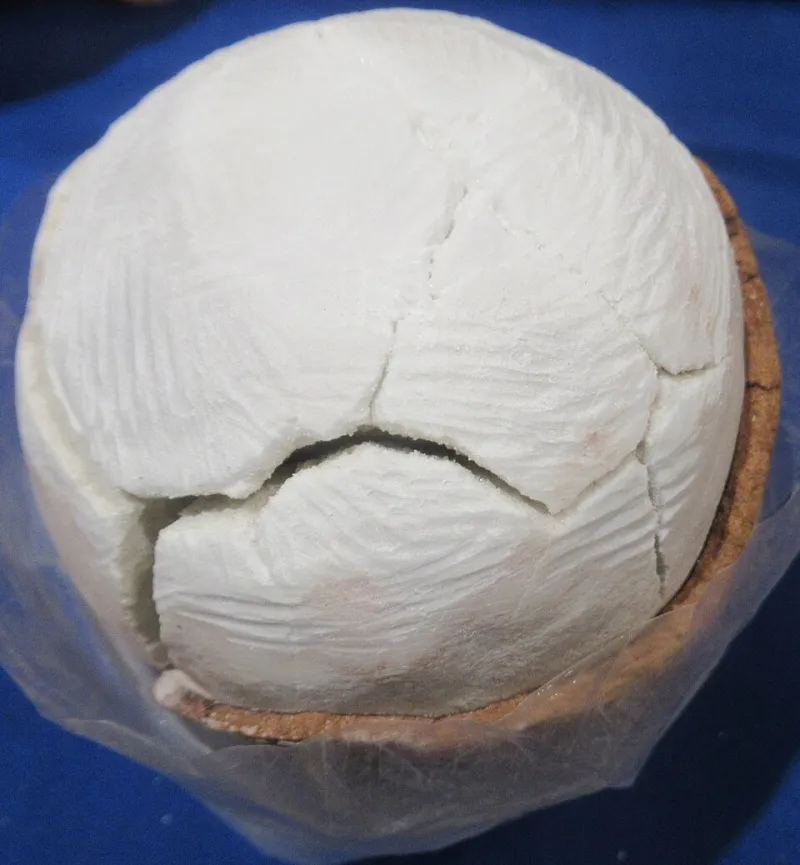
Photo: Unknown, CC BY-SA 4.0, via Wikimedia Commons
We need to talk about the salt.
Specifically, we need to talk about the $28 jar of hand-harvested Hawaiian black lava salt sitting on someone's open shelving next to a $34 bottle of finishing salt from the Himalayas and a small ceramic dish of fleur de sel that cost more per ounce than certain cuts of steak. We need to talk about the person who owns these things, who refers to them collectively as their "salt collection," and who has strong opinions about which one belongs on a soft-boiled egg versus a chocolate chip cookie versus the back of someone's hand at a mezcal tasting.
That person is real. They are multiplying. They have an Instagram.
How a Pantry Staple Became a Flex
Salt has always had cultural weight — it was literally used as currency, it preserved civilizations, it started wars. The word "salary" comes from the Latin for salt. There is nothing new about humans placing enormous value on sodium chloride. What is new is the aesthetic dimension. What is new is the Instagram pyramid.
The Instagram salt pyramid is exactly what it sounds like: a small, architecturally precise mound of large-crystal finishing salt, photographed from above on a dark slate surface, usually adjacent to a sprig of something fresh and a piece of protein that has been seared to a color that food photographers call "mahogany." The pyramid exists not to be measured or deployed — that would collapse it — but to be photographed. It is a visual signal. It says: I know what this salt is. I sourced it deliberately. I have opinions about mineral content.
The pyramid is the bougie cooking world's equivalent of the sneaker still in the box. It's not for use. It's for display. It's for the picture.
The Taxonomy of Salt Snobbery
Let's map the territory, because the hierarchy is real and the gatekeeping is aggressive.
At the bottom of the acceptable pyramid: iodized table salt. The Morton blue cylinder. If you use this for anything other than boiling pasta water — and some salt people would argue not even then — you are not to be trusted in a kitchen. You might as well be using margarine. This position is held with a conviction that would be alarming if it weren't about sodium chloride.
Moving up: kosher salt. Diamond Crystal specifically, not Morton kosher, a distinction that has generated more internet argument than several actual geopolitical conflicts. The Diamond Crystal vs. Morton Kosher debate has its own Reddit threads, its own Serious Eats essays, its own passionate defenders who will explain at length that the difference in crystal structure affects how salt dissolves and therefore how it seasons and therefore yes, it actually matters, stop laughing.
Above that: sea salts with geographic specificity. Maldon, from England, with its distinctive flat flakes, is the reliable luxury — the Patagonia vest of finishing salts. Accessible enough to be found at Whole Foods, prestigious enough to signal that you paid attention. Fleur de sel from Guérande, France, is a step up. Sel gris is for people who want to explain the harvesting process to you.
At the apex: the limited-edition, small-batch, single-origin salts that arrive in kraft paper packaging with a card explaining the specific tidal conditions under which they were harvested. Icelandic lava salt. Smoked salt from a specific Welsh smokehouse. Murray River pink salt flakes from Australia, which taste like salt but look like something a concept restaurant would serve on a mirror.
These are not seasoning. These are specimens.
The Drop Economy Comes for Your Spice Rack
Here is the development that truly signals we have lost the plot: limited-edition salt drops.
Several artisanal salt producers now operate on a model borrowed directly from the streetwear industry. Small batches. Specific harvest windows. Newsletter announcements. Waitlists. The vocabulary is identical: "This season's harvest is extremely limited." "Once it's gone, it's gone." "Restocking is not guaranteed."
People are setting phone alarms for salt drops. This is not a metaphor. This is a thing that is happening.
The collector mentality has fully arrived in the pantry. There are people with salt collections they have never opened — salts purchased as investment pieces, or as conversation pieces, or simply because the packaging was beautiful and the provenance story was compelling and they were already in a specialty food store spending $18 on a bottle of finishing vinegar and the salt was right there.
The unopened salt is the purest expression of where luxury food culture has arrived. It is not about eating. It has not been about eating for a while. It is about acquisition, curation, and the performance of knowing things that other people don't know.
The Dinner Party As Mineral Museum
The natural habitat of the serious salt collector is the dinner party, specifically the moment when the salt makes its appearance. This is choreographed.
The salt does not come out in a shaker. The salt comes out in a small pinch bowl — ideally handmade, ideally from a ceramicist with a following — positioned at each place setting or in the center of the table where it will inevitably prompt a question. The question is the point. The question allows the host to explain.
The explanation covers provenance, harvest method, mineral composition, and the specific application for which this salt is optimal. It takes approximately four minutes. The guests are held hostage by courtesy. They will learn about salt whether they want to or not. They will leave with opinions they did not arrive with. Two of them will buy salt online before they get home.
This is how the culture spreads.
The Defense, Briefly
In fairness — and PageRatta is nothing if not occasionally fair — finishing salt does make food taste better. This is not controversial among people who cook seriously. The difference between a steak finished with good flaky salt and one that isn't is real and detectable and worth approximately four to six dollars per steak, which is a reasonable premium for a noticeable improvement.
The problem is not that good salt exists. The problem is what happens when good salt meets the content economy and the status economy simultaneously. When the thing that makes food better also makes the person who has it seem more sophisticated, you get a runaway feedback loop. The salt stops being a tool and becomes a trophy.
You stop tasting it and start displaying it.
And then you're photographing a pyramid of it on a slate board at 11 p.m. on a Tuesday, adjusting the lighting, and wondering if the Maldon flakes are catching enough shadow.
The Morton is right there. It's fine. It's been fine for 175 years.
But it doesn't photograph well, and that's the whole problem.