You Named It, You Feed It, You Talk to It: The Sourdough Starter Has Replaced Your Therapist
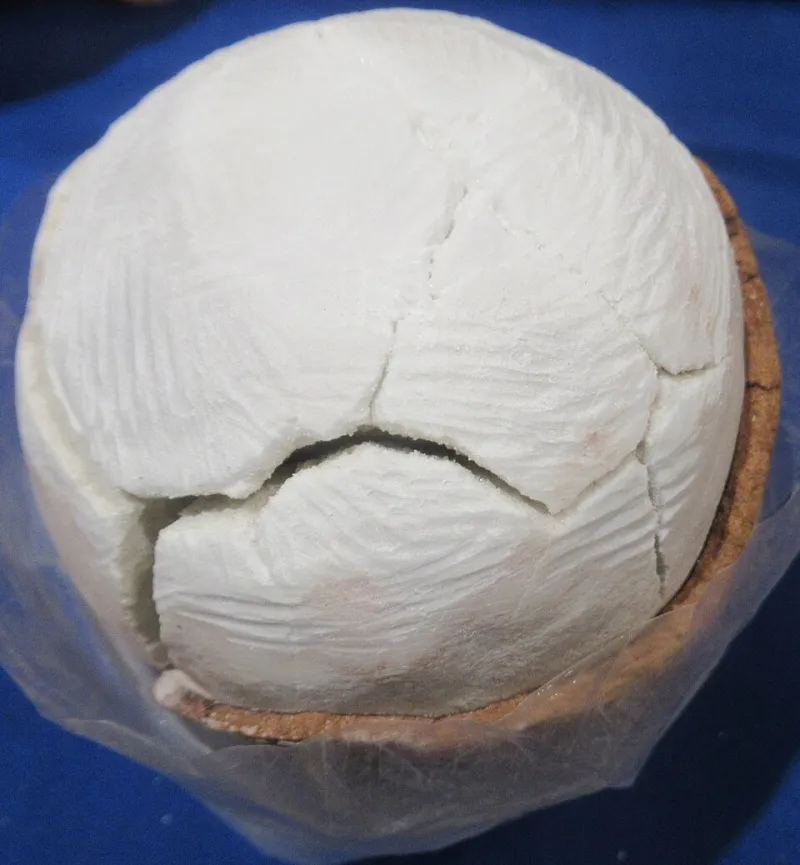
Photo: PilotChicago, CC BY-SA 4.0, via Wikimedia Commons
Let's be honest about what's actually living on your kitchen counter. It's not a baking ingredient. It's not a hobby project. It's a dependent. A small, bubbling, high-maintenance dependent that you have assigned a human name, spoken to in a baby voice at least once, and genuinely worried about while you were at work. You have a jar of fermented flour and you are emotionally invested in its wellbeing. This is where we are as a culture.
The sourdough revival didn't start with a cookbook. It started with a collective psychological event in early 2020 when millions of Americans, suddenly marooned inside their own apartments, needed something to nurture that wasn't themselves. Pets were adopted. Plants were purchased. And then, for a very specific subset of people who wanted the nurturing experience without the inconvenience of a heartbeat, there was sourdough starter.
The Naming Ceremony
Here is a data point that should concern us all: there are entire Reddit threads, Facebook groups, and TikTok comment sections dedicated to what people have named their starters. Clint Yeastwood. Fermentor of the Universe. Doughlores Huerta. Breadward Cullen. These are not jokes. These are the names people have assigned to microbial cultures with the same seriousness previously reserved for newborns and rescue greyhounds.
The naming is not arbitrary. Naming is attachment. The moment you call something by a proper noun, you have crossed a psychological threshold that is very difficult to walk back from. You cannot throw away something named Gerald. You cannot neglect something named Beatrice. You have, in the act of naming, created an obligation — and that obligation is, frankly, doing a lot of therapeutic work for you.
Psychologists have a term for this: the IKEA effect, extended. We overvalue things we've invested effort into. But sourdough takes it further, because the starter requires ongoing effort. Daily feedings. Temperature monitoring. The anxious inspection every morning for signs of life. It's not a project you complete. It's a relationship you maintain. And if that sounds familiar, it's because it is — it's the structure of caregiving, minus the legal and emotional complexity of actual caregiving.
The Status Architecture of Starter Culture
Not all starters are created equal, and the sourdough community will make absolutely certain you understand this. There is a rigid hierarchy here, and it operates with the cold efficiency of a Manhattan co-op board.
At the top: the inherited starter. If your starter is descended from a 150-year-old culture passed down through a San Francisco bakery, you are starter royalty. You will mention this at dinner parties. You will mention it at parties that have nothing to do with food. You will find a way to work it into a conversation about parking.
Below that: the pandemic original. If you cultivated your starter from scratch in March or April of 2020, you have seniority. Your starter has survived supply chain disruptions, three relationship changes, and two apartment moves. It has witnessed things. It has endured.
At the bottom, but trying hard: anyone who started one last year and hasn't quite worked out the hydration ratios. They are tolerated. They are not yet trusted.
This hierarchy serves a function beyond snobbery. It creates community. And community, as any actual therapist will tell you, is one of the primary things humans need to regulate their nervous systems. The sourdough cult has accidentally engineered a support network out of fermentation discourse. The starter is just the cover charge.
Daily Maintenance as Meditation
Here's where it gets genuinely interesting, and also slightly sad. The act of feeding a starter — measuring flour, measuring water, discarding the excess, watching for activity — is, structurally speaking, a mindfulness practice. It requires you to be present. It requires you to observe without judgment. It requires you to show up consistently, even when you don't feel like it.
Therapists recommend all of these things. Apps charge you $12.99 a month to guide you through all of these things. The sourdough starter delivers all of these things for the price of a five-pound bag of King Arthur bread flour.
There's also the grief component, which the community does not discuss enough. When a starter dies — and they do die, through neglect, through travel, through one catastrophic refrigerator cleaning incident — the response is disproportionate to the loss of a baking ingredient. People post obituaries. People mourn. People describe the experience using language typically reserved for actual bereavement. Because for them, it is. They lost a routine. They lost a responsibility. They lost the daily proof that they could keep something alive.
That's not nothing. That is, in fact, quite a lot.
The Loaf Is Almost Beside the Point
The dirty secret of sourdough culture is that a significant percentage of people maintaining starters are not regularly baking bread. They are maintaining the practice of having a starter. The loaf is aspirational. The ritual is real.
This has produced an entire ecosystem of starter-adjacent content: discard recipes (pancakes, crackers, pizza dough) that allow you to use the byproduct of maintenance without committing to a full bake. You can sustain the relationship indefinitely without ever producing the thing the relationship is theoretically for. Which is, again, a dynamic that should sound extremely familiar to anyone who has been in a long-term relationship in their thirties.
The sourdough starter has become, in the most literal sense, a practice relationship. Low stakes, high ritual, occasional payoff, and just demanding enough to make you feel useful without overwhelming you. It is the emotional support animal of the culinary world, except it lives in a mason jar and you cannot take it on an airplane.
Although, for the record, people have tried.
The Verdict
Is your sourdough starter replacing therapy? Medically speaking, no. Practically speaking, for a lot of people, kind of yes. It provides structure, nurturing, community, and a daily act of attention during a period when attention has become a scarce resource. It costs almost nothing. It produces real bread. It gives you something to talk about with strangers on the internet.
Worse things have filled the therapy gap. Much worse things. At least this one is gluten.