Your Walls Are Empty, Your Rent Is Insane, and a Linen Pillow Is Not a Personality
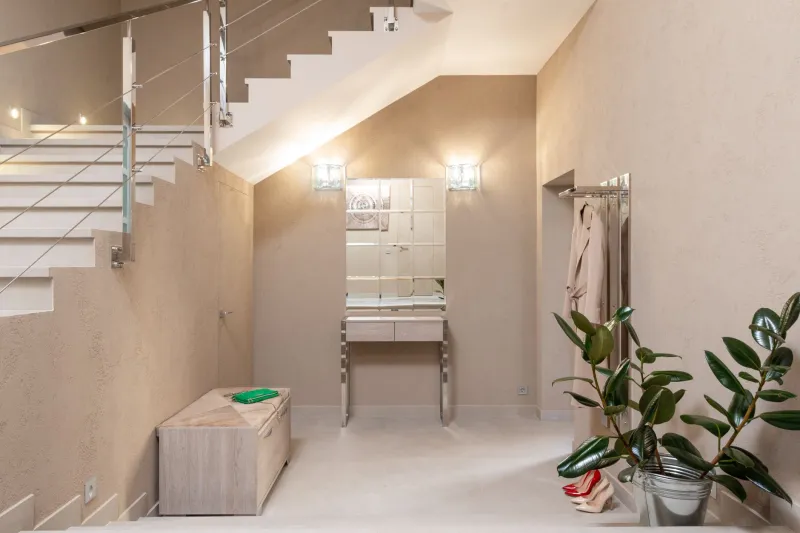
Somewhere around 2019, a significant portion of American millennials decided, more or less simultaneously, that the highest form of interior design was the complete absence of interior design. Out went the gallery walls. Out went the colorful throw pillows. Out went anything that suggested a human being with opinions and memories lived in the space. In came the beige. So much beige.
This was called minimalism. It was sold as sophistication. It was, in retrospect, an elaborate and expensive scam.
The Aesthetic That Ate Itself
The "clean girl" aesthetic — which migrated from personal styling into home decor with the subtlety of a landlord raising rent — operates on a seductive premise: that less is more, that simplicity signals intelligence, and that a deliberately barren apartment communicates something profound about the person who lives there. Specifically, that they are above wanting things.
The irony, which would be funny if it weren't costing people actual money, is that achieving this look of deliberate emptiness requires purchasing quite a lot of stuff. Specific stuff. Expensive stuff. The right linen duvet. The correct ceramic bowl (empty, displayed prominently, containing nothing). The exact shade of white that reads as "intentional" rather than "couldn't afford to repaint." The single plant, always a fiddle leaf fig or a monstera, positioned to suggest that nature simply wandered in and decided to stay.
None of this is cheap. The aesthetic of not having things has a remarkably high price of entry.
Pinterest Told You This Was Spirituality
The real genius of beige minimalism as a cultural movement was how thoroughly it got coded as a moral position. This wasn't just a design preference — it was enlightenment. Decluttering wasn't about having a tidier closet; it was about releasing attachment to the material world. The bare wall wasn't laziness; it was intention. The empty counter wasn't a rental-grade kitchen with nowhere to put anything; it was a meditation on presence.
Influencers — bless them, always — accelerated this reframing with extraordinary efficiency. A woman standing in a sun-drenched, suspiciously empty apartment in a linen set that costs more than most people's car payments became the aspirational image of an entire generation. The message was clear: if your space is full of things, that is a character flaw. If your space is full of the right expensive empty things, you have achieved something.
The wellness industry, which has never met a human anxiety it couldn't monetize, enthusiastically co-signed. Clutter, we were told by people selling organizational systems, was cortisol. Color was chaos. The neutral palette was, somehow, self-care.
What It Actually Did to Housing
Here's the part that gets genuinely annoying. The clean aesthetic, exported from influencer apartments into mainstream real estate culture, has had measurable consequences for what landlords think they can charge and what developers think they can build.
The open-plan, white-wall, concrete-floor aesthetic — which looks gorgeous in a 2,000-square-foot loft and absolutely miserable in a 600-square-foot rental — became the default template for new construction across American cities. "Minimalist" finishes got rebranded as "luxury," which allowed developers to charge luxury prices for apartments that contained, by design, fewer features than what they replaced.
No crown molding — that's intentional. No built-in storage — that's clean lines. No character, no history, no evidence that the building has any relationship to the neighborhood around it — that's contemporary. And contemporary means an extra $800 a month, apparently.
The tenant, having absorbed years of content telling them that bare walls equal sophistication, moved in and put nothing on those walls and paid through the nose for the privilege of living in a space that looked like it was staged for a sale that never happened.
The Plant Didn't Save You
Let's discuss the plant. Every beige minimalist apartment has one. It is always too large for the space. It is always positioned in the spot with the most natural light, which is also the spot where a human might reasonably want to sit. It is kept alive with a level of devotion that the tenant's actual relationships do not always receive.
The plant is doing a lot of work. It is providing the "organic element" that makes the space feel "lived in" without introducing any of the mess that actual living produces. It is the single concession to warmth in an environment that has otherwise been optimized for photography. It is, in a very real sense, a prop.
The fiddle leaf fig, specifically, became so ubiquitous in aspirational interiors that it experienced an actual market surge. A plant that was previously a moderately unremarkable houseplant became a status object because enough influencers put it in enough corners of enough bare-walled apartments that consumers associated it with a certain kind of curated, expensive, empty life.
A plant. We assigned class signaling to a plant.
What You Actually Lost
The thing about the homes people lived in before the beige takeover is that they looked like people lived in them. There were books stacked sideways because the shelf ran out of space. There were photos on the refrigerator. There were mismatched mugs and a couch that had clearly been sat on by humans who had feelings and experiences and occasionally spilled things.
Those spaces had something that no amount of correctly sourced linen can replicate: evidence. Evidence that a specific person, with a specific history, inhabited this place and left traces of themselves behind.
Beige minimalism asked you to erase all of that. To perform a kind of voluntary amnesia about who you are and what you've accumulated, in exchange for an apartment that photographs well and costs a fortune and feels, on a quiet Tuesday night, like absolutely nobody lives there at all.
The plant is still alive, though. Barely. You're doing your best.